Wednesday, February 15, 2012

The Great Flood- Perception vs. Reality


"First, notice that in Noah's case FAITH WAS THE FIRST PRINCIPLE. The text begins, "By faith Noah." We shall have to speak about his fear—being "moved by fear"; we shall also remember his obedience, for he "prepared an ark to the saving of his house." But you must take distinct note that at the back of everything was his faith in God. His faith begat his fear: his faith and his fear produced his obedience. Nothing in Noah is held up before us as an example, but that which grew out of his faith" ~C.H. Spurgeon


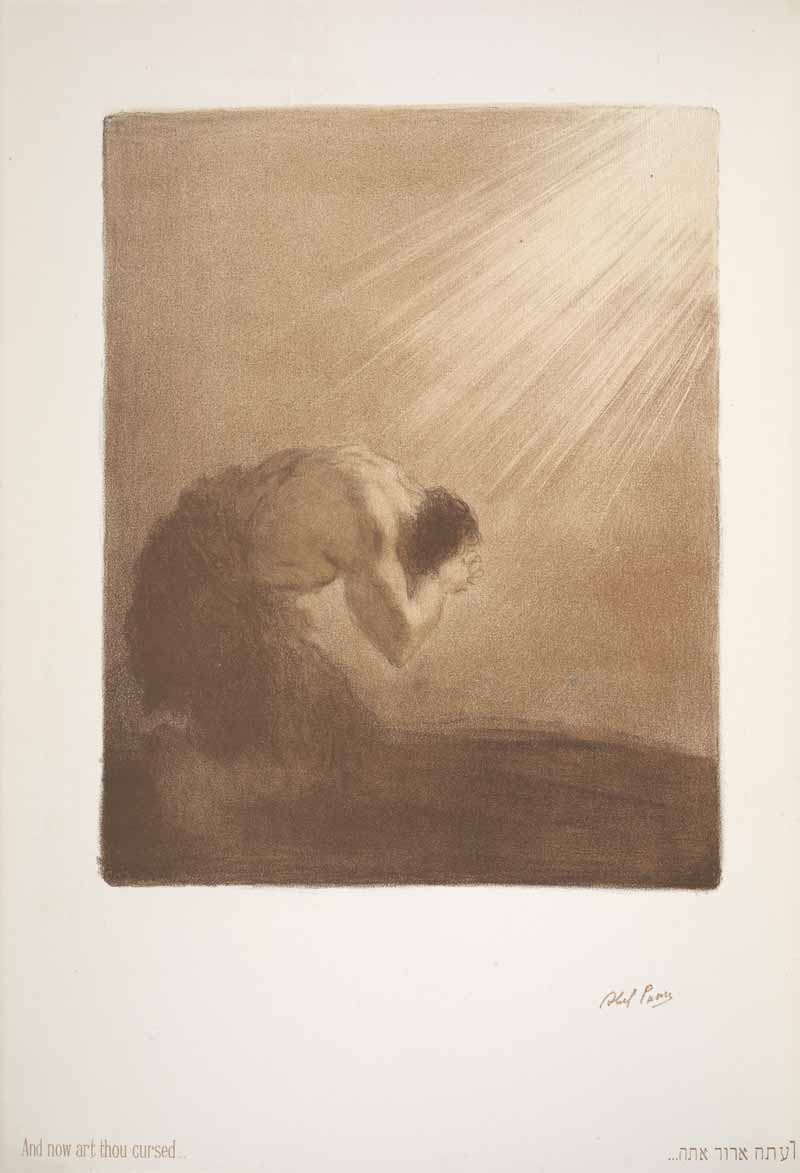
The story of Noah's Ark is for many children, one of their first exposures to the Bible. When we were getting ready for the birth of my son, I do not think I can count on my fingers alone how many gifts we received with an image of Noah and his happy creatures sitting in that lovely large wooden boat.But in reality this story is not at all g-rated and the picture I posted in the top right corner is a very understated version of what this tragedy would have looked like.  

"On that day all the springs of the great deep burst forth, and the floodgates of the heavens were opened. And rain fell on the Earth for forty days and forty nights." (Genesis 7:11) Scripture then continues to say, "Only Noah was left, and those with him in the ark." (Genesis 7:23) All I could think of when I read this passage was how terrifying this would be. I had heard that water fell from the sky for forty days and forty nights but I had never realized that it was also coming from the ground.  Everything is wiped out.  All life on Earth is extinguished except for that of Noah, his family, and the creatures on the ark.  This story describes a catastrophe beyond which we can even imagine. 

Since I began reading the Bible a few weeks ago, I have thought back to all the times I was told that the God of the Old Testament was jealous and vengeful.  But even after reading about the expulsion of man from the Garden of Eden, the punishments endured by Cain, and the tragedy of The Great Flood...

I simply don't agree.

In the portions of Scripture that I have read so far, it is humanity that turns away from God, not God that turns away from humanity. In essence, we are choosing our fate.  Our free will determines how our lives will change.  Since Noah was righteous, God saved him, but when we veer off of that path, it is no longer up to God to save us.  It is OUR choice.

God did not want Adam and Eve to suffer, they chose that when they took a bite of the Forbidden Fruit and did not take responsibility for their actions.  

God did not want Cain to wander the world without Him, but Cain made that choice when he struck his own brother. 

God was proud of his Creation until humanity turned away from Him completely, and by Him I do not just mean God in the personal sense, but God in the sense of all that is love and peace. "The Lords saw how great the wickedness of the human race had become on the earth, and that every inclination of the thoughts of the human heart was only evil at the time. The Lord regretted that he had made human beings on the earth, and his heart was deeply troubled." (Genesis 6:5-6) Since according to the story, ALL humanity except for Noah was evil, it is much easier for us to understand why God takes such drastic measure.  But again, it is important to note that it is humanity that guides God's decision through their actions.  After all, Noah's goodness saved him. :)

After reading through Noah's epic tale several times, I began to search for sermons about these passages in order to draw the deeper meaning out of the story. My favorite sermon is by C.H. Spurgeon. (I have included a link below)  I chose the quote at the top of the page because I agree that Faith is indeed the essence of this story.  All that Noah did, he did out of Faith. IMMENSE Faith.  

God tells Noah the exact specifications on how to build the ark.  When the measurements are converted we find that the boat would have been truly massive.  Anywhere from 450-515 ft long.  Keep in mind that during Noah's time, men in Mesopotamia were still using wedges to split wood in two.  This would have taken an incredibly long time, especially since the only help he had was from his family.  Not to mention that everyone (including his family at first) must have thought he was completely insane. 

Spurgeon brought up how people would have snickered behind his back and jeered at him.  Despite all these obstacles Scripture says, "Noah did everything just as God commanded him." (Genesis 6:22) Once The Great Flood begins, Noah's family is shut up inside the boat with all of the strange and beautiful creatures inside for 150 days before settling upon a mountain top. It is another 40 days before Noah even dares to open a window to let out the raven to see if the waters have receded enough to reveal dry land and leave the ark.  More weeks go by until he sends out a dove from the ark a second time and it returns with an olive leaf.  (Aha! The symbol for peace..I get it now! :) )Even then he waits, sends it out a 3rd time, and the dove does not return for it has presumably found a home. Guess what he does then? He waits some more! 


One can only imagine how terrified Noah and his family were after witnessing such a catastrophe.  I don't blame him for waiting so long before stepping out of that boat.  The inhabitants of the ark stayed on the boat for the better part of a year.  It would have been an unimaginably dark and treacherous voyage, but when Noah steps out of the ark, a New Day begins. :)God makes a covenant with Noah saying, "Never again will all life be destroyed by the waters of a flood; never again will there be a flood to destroy the Earth." (Genesis 9:11) God places a rainbow in the sky as a beautiful sign of this promise.

But what is the significance of this flood? There are several stories dating from this same period in Mesopotamia which speak of a terrible flood.  The Epic of Gilgamesh is but one of them.  Scholars believe that there was indeed a great flood in this region at 9400 b.c.  When the Earth's temperature rose the water from the Mediterranean flooded into the Dead Sea, forcing many to abandon their towns and homes.  Perhaps this helped to develop the story of Noah, though it would have been told orally for thousands of years before finally being written down.

I think the deeper message is God baptizing the Earth.  He is literally washing away the sins of humanity.  Once he does this Noah and his family can begin a new life with God. In addition, Noah is held out to us as an example of Faith.


*I have included the links to a History channel documentary on Noah's ark and a sermon by C.H. Spurgeon.


http://www.youtube.com/watch?v=ixga38W-_4k

http://www.ccel.org/ccel/spurgeon/sermons36.ii.html


Tuesday, February 7, 2012

Family Lines


I considered skipping the genealogy accounts which lead to the story of Noah, but I decided that there must be a reason for that passage in scripture.  If it weren't important, it wouldn't be in there right? :)  I have included the chart above so you can easily see the names and lifespans of the ten generations of men which occurred between Adam and Noah.

Each of these men have lives which span between 350 to almost a thousand years.  When I researched this on the internet the general consensus was that biblical scholars are stumped.  I wish I had more answers here but all I have is more questions! 

If the numbers are taken literally, that means Noah was born only 126 years after the death of Adam.  Methuselah and Lamech would have been alive when Noah began building the ark. I had never thought about all this generational overlap before!  And though each of these men have long lives, it is a relatively short time between the creation of man and the great flood. 

Enoch is the most mysterious character in this portion of Scripture.  "After Enoch became the father of Methuselah, Enoch walked faithfully with God 300 years and had other sons and daughters. Altogether, Enoch lived a total of 365 years. Enoch walked faithfully with God; then he was no more, because God took him away." Genesis 5:22-24  In what way did Enoch "walk with God"?  When God "took him away," did Enoch die or was he raised up body and soul?  There seemed to be a lot of debate over this when I did research over the internet.  I also don't understand why someone who was so close to God would have only brief passage in the Bible.  I want to know more about the mysterious Enoch!

Reading this portion made me realize more than anything that I need the help of some spiritual and theological teachers along the way.  Though I would love to simply comment on the way each Bible story makes me feel and the meaning I draw from it, I think it is most important to understand the scriptures' full context first! I will keep you posted on what resources I choose to help us along the way!


Thursday, February 2, 2012

Cain: A Lesson in Personal Responsibility

"All blame is a waste of time.  No matter how much fault you find within another, and regardless of how much you blame him, it will not change you."  ~ Wayne Dyer 

Accepting 100% responsibility is one of the greatest challenges we face. Most adults will blame their problems on almost anyone before they acknowledge that it is their choices, and nothing  else, that have landed them in their current situation.  Looking inward to find an answer in our own hearts and minds is much scarier and difficult than blaming our families, government, parents, teachers, bosses etc.  This is not to say that we do not suffer from the bad decisions of others.  That is only natural, but it is how we choose to view and use those outside circumstances which determines our success in life.  Jim Rohn, the premier business philospher of the 20th century was known to say, "The same wind blows upon us all.  It's how you set your sail that makes the difference."

Perhaps you are wondering what this has to with the story of Cain and Abel. It was evident to me that Cain displayed a total lack of personal responsibility throughout this story.  When the brothers each made an offering to God, Cain brought some of the plants he had harvested.  Abel on the other hand, brought forth meat from the firstborn lamb of his flock.  Since Abel had given God the best offering he could provide, he was looked upon with favor.  Cain had not put as much effort into his sacrifice and therefore he did not receive the Lord's favor.  As we know, Cain was furious and instantly looked for someone to blame.  If Abel wasn't around to make him look bad, Cain's offering would have been favorable to God. But in reality, the only person he had to blame was himself.  If Cain had put in the same amount of care into his offering, both sacrifices would have been seen as favorable in God's eyes.  

Instead of accepting responsibility for his error, Cain tricked his brother into accompanying him into the fields where he then kills him.  

"Then the Lord said to Cain, 'Where is your brother Abel?'
'I don't know," he replied. 'Am I my brother's keeper?'"  (Genesis 4:9)

If you are not clear on what Cain means by this, it is basically akin to him sarcastically telling God that he isn't his brother's babysitter.  The famous 19th century preacher, Charles Spurgeon, spoke in one of his sermons, "Cain displayed a shameful tone of presumptuous impudence in his insulting reply to the Lord God. If it had not been on record in the page of inspiration, we might almost have doubted whether a man could speak so impudently when actually conscious that God himself was addressing him." It is such a stunningly insolent response, and at the same time, a form of denial.  Cain knows exactly what he did, but doesn't want to accept responsibility.  His sarcasm could be seen as a defense mechanism to avoid God's question.  It is interesting as well that his parents blamed one another after they ate the forbidden fruit in the Garden of Eden.  Neither one would admit guilt.  There seems to be a pattern building, even at the very beginning of the Bible's version of human history,  humanity seeks to blame outside circumstances for their own mistakes.

God of course knows the crime which Cain has committed. "What have you done? Listen! Your brother's blood cries out to me from the ground." (Genesis 4:10) Cain is then cursed to wander the Earth, but God does not abandon him.  When Cain begins to fear that he will be killed after being driven from the land, God puts a special mark on him so no one will harm him, and proclaims that anyone who would kill Cain would suffer vengeance seven times over.  I found it amazing that God would still protect Cain even though he just murdered his own flesh and blood!

This is an amazing example of the love of God in the Bible.  Though He is punishing Cain, God does not want to see any harm come to his children.   

Tuesday, January 31, 2012

The Fall From Grace

Have you ever heard the same song repeatedly and then gone on without hearing it for a long time?  Then one day it is randomly aired on tv or radio and you suddenly hear the words or understand the meaning behind them in a different way?  That's how I felt about Adam and Eve after reading the story for the first time in years.  My first conclusion after having read it this past week was that the story was much more tragic than I remembered.  The second was how much richly layered symbolism occurs in this portion of scripture.  As a child, the two trees were just two trees.  The snake was just a snake.  And the story was just a story.  As an adult, I've realized that isn't the case.

I'd like to insert a short reminder here to the reader that we may all identify with Scripture in different ways. What I have listed below are simply the revelations I drew from the text.

After God creates man from the dust of the Earth, and breathes the breath of Life into Adam's nostrils, he plants a garden called Eden which is pleasing to the eye and good for food.  He puts Adam in the garden and creates a partner for him named Eve. The garden lies between the Tigris and Euphrates rivers which is in fact a region easily located on a world map. It known as Mesopotamia or "The Cradle of Civilization" because of the agricultural revolution which first boomed in this region in 10,000 B.C.  In the center of this garden, God placed the Tree of Life and the Tree of Knowledge of Good and Evil.  And God commanded Adam "But you must not eat from the tree of the knowledge of good and evil, for when you eat from it you will certainly die." ~Genesis 2:17

In this garden, Adam and Eve had everything they could ever want or need.  They had immortality, an abundant food supply, a loving God, a beautiful place to live, peace, and love for one another.  The serpent who tempts Eve is described as more crafty than any of the animals the Lord God had made. Once Eve saw that the fruit looked good enough to eat she was tempted by the fact that she could earn wisdom from eating it.  It is then that she takes her first bite before sharing it with Adam.  Once they gain this knowledge of good and evil they are instantly ashamed and cover themselves with fig leaves.

I found this to be very true to the human condition.  How many times do we choose to let go of a perfect situation so we can experience something new, even when we know it may hurt us in the long run?  We are so curious and tempted by the knowledge a certain experience may bring that we would sacrifice our own happiness.  We see this over and over again in history and today's society. It is also interesting to note that once they understand both good and evil, they experience a new emotion.  Shame or guilt, which is the only wisdom they receive from the forbidden fruit.  It is because of this shame that neither Adam nor Eve take responsibility for the mistake they have just made.  Adam blames it on Eve, and Eve blames it on the snake.  Therefore the knowledge of good and evil and the guilt which comes from knowing the difference causes them to make yet another mistake.

God understands that all of them are equally responsible and puts a curse on each of them.  The snake must crawl forever on his belly. Woman must experience the pains of childbirth, and Man has to work the ground for  food.  At this point the story takes a different direction.  Instead of just being about the nature of human error, it becomes an explanation.  If we knew nothing of science or how we came to be, one can only imagine what we would think when we saw women giving birth or men working hard all their lives just to survive.  It probably begged the question What did we do to deserve this?

The second two chapters of Genesis hold our answer. Humanity, in general, is never satisfied. God gave Adam and Eve all that was good but they had to have the one thing that was forbidden to them, simply because it wasn't already in their grasp, even though they knew it had the potential of causing great harm.  I also found it fascinating that Eve was tempted by the wisdom she could attain from the fruit.  Humanity is never content to just experience the world moment by moment.  We are curious.  We want to know why, how, where, who? It is what separates us from the rest of the creatures on Earth. We have an insatiable desire to to learn.  To know what we know not already.

Once Adam and Eve understood the meaning of good and evil they were banished from the garden and forbidden to eat of the Tree of Life which would grant them immortality.  So perhaps the harsh moral of this sad story is that our constant dissatisfaction with Life, or our increasing wants and desires are what separate us from God.  I remember reading a book by the Dalai Lama in which he explained that true happiness is achieved when we no longer desire anything. Perhaps the ancient Hebrews would agree with him.

My husband has a very hard time stomaching this story.  The past three days that I have been researching the symbolism of the two trees, the fruit, etc., he has been comparing the Garden of Eden to a totalitarian government.  "Everything is provided and you aren't supposed to ask questions.  It sounds like 1984 or North Korea."  To be completely honest, I could see his point.  It's hard to agree with a story in which our quest for knowledge is seen as forbidden or negative. I believe that more of God is found in everything we learn and discover.  He created our curious minds and so he must have a purpose for them.  However, I do agree that human greed, our want for things we cannot have, can at many times be our undoing.  

My sister has another interesting opinion. She holds the belief that our souls choose to come down to Earth and experience life and to learn more about the different ways to experience love.  Perhaps that is similar to the ancient Hebrews' answer to why we are here.  It is because humanity would rather learn through struggle than stay in blissful ignorance for eternity.


Sunday, January 29, 2012

The Fullness of Creation

In the beginning God created the heavens and the Earth..." ~ Genesis 1:1

Day 1: Separation of Light from Dark 


Day 2: Creation of sky


Day 3: Division of Land and Sea; sprouting of plants


Day 4: Moon, stars, sun are created to give light to the Earth, as well as to "serve as signs to mark sacred times, and days and years..." Genesis 1: 14


Day 5: Creation of birds, and creatures of the sea


Day 6: Wild animals and livestock + creation of man in God's own image


Day 7: a holy day of rest

To be completely honest, I may have more questions than answers for the beginning of the Bible, even though the story of creation is written very simply.  Each day, God blesses the planet with a new gift.  His creations please him, and so he creates more.  But what intrigues me is, why seven days? Why were things created in that order? It is very specific, and after this first chapter of Scripture, the number 7 is encountered repeatedly in the subsequent chapters and books of the Bible.  So I did a little digging...

After all, I highly doubt that the first writers of Scripture picked this number out of the blue and just decided it would be Holy.  It had to have some significance if not it wouldn't be in there in the first place!  Well it turns out that the root of the word seven in ancient Hebrew meant to be full and complete. Aha! Well now that makes more sense!  The idea behind the 7 days of creation, is that it was perfect. Nothing needed to be added or taken away.  The world was as it should be, and God saw that it was good. 

And what completes the fullness and perfection of God's hard work in creating all that we know in the Universe? Why, a day of rest of course!  "...so on the seventh day he rested from all his work. Then God blessed the seventh day and made it holy, because on it he rested from all the work of creating he had done." ~ Genesis 2:2~3 Wow, what an important lesson!  After a hard week at work, even God needs a break to reflect on all the good he has created, and to relax as well.

For many of us who are strong in our faith, the Sabbath is a day to honor God.  We may go to church, the temple, the mosque, or wherever your house of worship may be, and there we praise God for all the blessings he has bestowed upon us.  We recognize his work in our lives.  Even those without faith in the Lord have their Sunday rituals.  How many of you reading this sleep in on Sundays and make pancakes with your kids, or relax in the backyard with a cup of coffee and the newspaper?  Many of us still honor some of the principles behind the Sabbath every week without even knowing it!  But how often do we use it as a day of reflection, to rest and reflect upon our own successes during the week?  God created us in his image and yet we have a hard time acknowledging ourselves for the things we created or did the previous week.  Acknowledging God for his hand in our lives and relaxing on this day is important, but lets not forget that the completeness of the week (according to the first two chapters of Genesis) came from resting because God looked upon the good things he had accomplished. If God finds the need to do that, then we sure do too!

*                *                         *                          *                          *                     *                     *

A day of rest may complete the week, but the culmination of God's creation is man.  "Then God said, "Let us make mankind in our image, in our likeness, so that they may rule over the fish in the sea and the birds in the sky, over the livestock and all the wild animals, and over all the creatures that move along the ground."  Genesis 1:26  

I have to admit I had a hard time swallowing this one. The idea of humans thinking that they "rule over" all living things seems to get us into big trouble (i.e., global warming, animal extinction, threatening the ecosystem...I could go on and on)  And the craziest part of this is that when we do take a hand at dominating Mother Nature we end up further harming ourselves.  All living things on Earth are interconnected.  We know this is fact.  So when we interfere too much it's not only bad for the environment, the animals, the plants, but it's also really bad for us in the long run!

I had to reread this passage a few times to realize that I was seeing the phrase "rule over" in a negative light. Most of the time when we hear that phrase we think of someone exerting power over the helpless (at least I do.)  So maybe this passage isn't just supposed to give us a sense of entitlement over the Earth.  Perhaps God is bestowing a RESPONSIBILITY upon Adam.  A good ruler doesn't take advantage of the helpless.  He protects them. He helps them to thrive.  So instead of seeing this passage as proof of humanity as supreme beings, I am choosing to see it as a task God has given us.  Because as all you Spider-Man fans out there know, With Great Power Comes Great Responsibility. :) 


*         *                 *                    *                       *                         *                 *                 *               *

Actions Steps:

-This Sat./Sun (whenever you celebrate the Sabbath or have your day of rest) write down the things you accomplished in the previous week.  It can be patting yourself on the back for finishing that triathlon, being more patient with your family, or even just recognizing yourself for getting to work on time every day this week!

-Be a good protector of the Earth.  If God truly created us in his image to rule over the Earth than it's our job to treat it with respect.  If you see a piece of trash on the sidewalk, pick it up and throw it away.  If you haven't watered your indoor plant in a while, water it!  Donate five bucks to the ASPCA, play with your Dog. Give your cat a treat.  Do whatever it is that makes the world a little better for our roommates here on Earth!

-Give thanks- Thank God for the wonder that is creation.  Think of how amazing Life on this planet is. How it can adapt to almost anything.  How long did it take for that canyon to be carved up by the water running through it?  What dramatic shifts in the Earth's crust had to take place for a mountain to form?  How many generations did it take for human intellect to evolve to its current state?  That is all so amazing!  The best part is that creation never truly stopped.  Our world is constantly changing, our environment always adapting.  Think of how complicated a process like photosynthesis is, or how intricate the human circulatory system is.  How many microscopic events had to take place in order for Life on Earth to thrive the way it does?  If you truly believe God had a hand in all these things, thank him! If you are still unsure of the existence of God or are in a state of unbelief, feel free to write down what you are grateful for in the Universe anyways.  Staying in a state of gratefulness keeps us humble and in awe of the world around us. 


Wednesday, January 25, 2012

Picking and Choosing

Now that we have set out upon this quest, two big questions remain.

1. What version of the Bible will we read?
2. How much of the Bible will we read per day, and what is our deadline?


I say "we" because I'm inviting you to read along with me.  My interpretation of a passage may be different than yours and I feel that by making this an interactive experience each of us will get more out of this journey.  Of course, if reading the entire Bible seems too daunting a task at the moment I also invite you to simply take a look at the blog and if you are inspired, to look up the passage we are discussing.  Like I said,  no matter what your religious background or lack their of, I'm happy to have you along for the ride!

Now as to the subject of what version of the Bible to read, well this decision is more complicated than I originally thought.  Turns out there are dozens of English translations of scripture.  Perhaps you knew that already, but I was not aware that we could fill an entire book case with different versions of the Bible.  Before a long Google search, browsing a local Barnes and Noble, and asking enough questions at the local religious media store to drive any sane sales clerk mad, I only new of King James, whatever the Catholic version was called, and was also vaguely aware of another translation known by the acronym NIV.  I had, and still have a lot to learn!

Since our options are numerous I decided to write down a few criteria for the version of the Bible that would best fit our purpose in this blog.

1. It must be easy to read so that you and I are able to follow along without looking up every other old English word that is now barely used in everyday language (as few thees, thous, hithers, and thithers as possible)

2. It must be as literal a translation as possible while still remaining clear in the English Language.  The more literal the translation, the less likely we are to have the latest translator's opinion versus the actual word of God.  Of course, no matter which version we choose, the stories in the Bible were told orally for many generations before they were finally written down and will always have the writer and translators personality mixed into the message, but we want to remain as close to the essence of the story as possible.

3. It must not be so simply written that the beauty of certain passages are lost, or certain messages glossed over.  Even though we want our Bible to be one we can understand easily, we must also accept that because Scripture describes an ancient time, will sometimes have to do some research and digging on our own to find the deeper meaning.  Simple texts have a way of describing the meaning for us instead of letting us find it ourselves.  And that is the opposite of what this blog is about!

4. The version we choose must be well known, cheap and easily accessible.  Of course it is natural and good to want to invest in a beautiful, ornate, and sometimes expensive family Bible.  However, I intend to highlight, write in the margins, bookmark, and fold over page corners while studying Scripture.  I think it would be best for myself and you the reader to have a Bible in which you can scribble notes and ideas.  Its important that if you decide to read along, the Bible I choose is easy for you to find and inexpensive so no matter what your financial situation is, you can get hold of a good quality one.

After sifting through different versions I came up with a few possibilities.

 The New Living Translation
The New American Standard Bible
The New American Bible
The New International Version
(I found it amusing how every version I found appealing had "New" in the title.)

I know many of you are fond of Ol' King James but from my research I found that though it is a beautiful version of the Bible, it is also one of the least literal.   At the time of translation, not many of the ancient Hebrew and Greek texts were consulted, resulting in beautiful psalms written in Old English, but with many of the original messages lost in all the ornate language. So in case you were wondering why one of the most common translations in not on our list, please note that though any Bible that you can draw inspiration from is fantastic, but for our purposes it isn't the best fit.
 
The New Living Translation (NLT) has a reputation for being easy to read while remaining as close to the original ancient Hebrew and Greek texts as possible.  I also picked the New American Standard Bible  because it is supposed to be a very literal translation, though it sometimes gets criticized for not sounding "pretty enough" when you read it out loud.  At first I could not see how this would be an issue, but I guess if we are going to read the whole Book than it would be nice to have one with a translation close to the original ancient texts while still sounding beautiful in the English language.  It's all about balance right?

Which brings us to The New American Bible which is also a very literal version but translates beautifully.  Personally, this would be my number one choice, however since it is created especially for the Catholic Church I don't know if it would go with our theme of all-inclusive scripture interpretation. In addition, it is harder to find at your average book store.

The New International Version (NIV) I was happy to find, is reputedly the most highly researched translation on the market.  It remains close to the original Hebrew and Greek texts while being easy to read. Best of all it is the most widely read English version of the Bible in the world, which means it is easy to find, and guess what? Its inexpensive too.  So after having reviewed the list above The New Internation Version is our winner! :)

However, before we go running into the other room to grab one that may already be in our house, or go to the bookstore to purchase a Bible, please note that the NIV also publishes special editions such as study Bibles, Bibles for Mothers, Bibles for Fathers, Bibles for Children etc.  We just want a plain old Bible people!  No frufru fancy stuff!  We don't want a book that tells us the meaning for you, we want a Bible that make you search for the meaning yourself!  Of course there are times when knowing the historical circumstances behind a biblical story can enhance our understanding of its message,but we will find our sources when the time comes.  So don't worry.  I will keep you posted!  In the meantime get yourself a 2011 edition of a standard NIV Bible. :)

Now, how will we divide our reading over time? When is the deadline?  My mentor in business has always told me that if we fail to plan, we plan to fail.  In order to set a goal it must be attainable, measurable, and have a time frame.

I could not think of a better time frame than 1 year.  I will be including an attachment with our reading plan in the next 24 hours and tomorrow our adventure begins!  There will be a 365 day countdown on each post so we can track our progress.  I am excited to know what you are hoping to get out of this too, so please feel free to post in the comment section below!


Yours in Faith,
Mimi <3